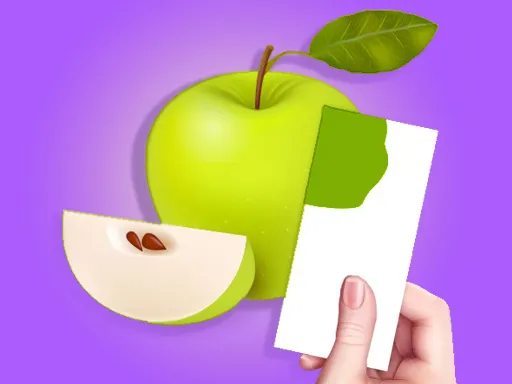
If you want a simple guide on how to play Color Match, start here. The game looks easy in the first minute, but better results come from control, not luck. You need to read the target shade, mix colors with patience, and know when your result is close enough to move on.
On major browser portals, Color Match is described as a creative puzzle where you paint a target object, often a fruit or another bright 3D item. Several versions also score the result by percentage, so the round is not only about finishing. It is about getting close to the right shade. Source: CrazyGames Source: GamePix Source: Pokid
If you want to practice while you read, open the game on Color Match Game. Playing one round after each section is one of the fastest ways to turn this guide into real skill.
What Is Color Match?
Color Match is a browser puzzle about mixing colors until your paint looks close to the target object. The object may be a fruit, a simple shape, or another item with a clear base tone. Your job is to study the example, blend the available colors, apply the paint, and compare your result with the original.
That core loop matters because this is not a speed-tapping game. It is a reading game. You look at color, adjust the mix, and learn through visual feedback. CrazyGames describes it as a creative puzzle art color-matching game where players bring 3D objects to life. GamePix also highlights the idea of mixing primary colors to create different shades. Source: CrazyGames Source: GamePix
In plain words, Color Match teaches you to notice small color differences. If the mix is too dark, too warm, or too dull, the screen shows that right away. That feedback is why the puzzle feels relaxing and challenging at the same time.
The Goal of the Game
The goal of Color Match is to create a paint result that is close enough to the target to pass the level. On some portals, the game shows a percentage score after you apply the paint. CrazyGames says early rounds may feel close at 60 percent or 70 percent, but 90 percent is where you really hit the target. Pokid also notes that you need to pass a minimum accuracy level before finishing a round. Source: CrazyGames Source: Pokid
This means the puzzle rewards accuracy in two ways:
- You clear the level.
- You train your eye for the next level.
When you treat the experience like a puzzle instead of random painting, the rules become much easier to understand.
Controls and Setup
The controls are simple. CrazyGames lists click and drag with the left mouse button to mix colors. Pokid describes a similar idea with tap to select colors and hold to color. In practice, Color Match feels almost the same across devices: choose the paint, adjust the amount, and apply it to the object. Source: CrazyGames Source: Pokid
That simplicity is one reason the game works well in a browser. You do not need a long tutorial. Most players can start in under a minute, and that low barrier is part of what makes Color Match such a strong casual game.
How a Round Usually Works
A normal round follows a clear order:
- Look at the target object.
- Identify the main color family.
- Mix the available colors.
- Apply the paint.
- Compare the result with the original.
- Adjust if the game allows another try.
Some versions then rate your work and move you to a new object. GamePix also notes that successful creations may be sold or auctioned after the round, which adds a light reward loop to the experience. Source: GamePix
The key idea is that every round starts with observation. If you skip that step, you will waste paint and make harder corrections later.
How to Play Color Match Step by Step
Step 1: Read the target before touching the palette
Many beginners open Color Match and start mixing right away. That is the fastest way to miss the real tone. Before you add anything, look at the target and ask three questions:
- Is the color warm or cool?
- Is the color bright or muted?
- Is the color light or dark?
This small pause gives the round structure. A tomato red is not the same as a cherry red. A watermelon rind is not the same as a lime green. If you read the target well, the rest of the process becomes much more manageable.
Step 2: Start with the dominant color
In Color Match, the dominant color is the family that carries most of the object. If the target looks mainly red, start red. If it looks mostly yellow-orange, start there. Do not build the mix from tiny corrections before the base is right.
This is where many weak attempts go wrong. Players keep adding small amounts of different colors without a stable base, and the final shade turns muddy.
Step 3: Add small corrections
Once the base is close, use small changes. GamePix advises players to layer colors gradually, and that is one of the best beginner tips for this game. A tiny correction is easy to control. A large correction can destroy a good mix. Source: GamePix
If the paint feels too bright, calm it down slowly. If it feels too pale, deepen it in steps. Think of the palette as a steering wheel, not an on-off switch. This is one of the biggest habits that separates weak play from strong Color Match play.
Step 4: Compare the result honestly
After you apply your paint, compare the result side by side with the target. CrazyGames points out that this visual comparison is part of the fun and part of the challenge. Source: CrazyGames
Do not just ask, “Is it close?” Ask better questions:
- Is my result darker?
- Is it more orange?
- Is it less natural?
- Does it look flat next to the target?
Honest comparison is how you improve from one round to the next.
Step 5: Build a simple correction habit
The best way to improve at Color Match is to follow a repeatable habit:
- Read the target.
- Build a base.
- Correct in small steps.
- Compare carefully.
- Remember the mistake.
When you repeat that loop, the puzzle feels less random and more teachable.
Seven Practical Tips
1. Do not chase perfection too early
In Color Match, you do not need the perfect color on your first move. You need a usable first mix. Once the base is close, the rest becomes much easier to control.
2. Watch brightness before small detail
Players often focus on tiny color differences before they fix the bigger problem: brightness. If the result is too dark, the round will still look wrong even if the hue is close.
3. Keep every change small
Small changes are powerful because they preserve a decent mix. Big changes often create panic painting. If a level feels hard, slow the scale of your corrections. This one rule alone can raise your Color Match score over time.
4. Learn common fruit tones
Many browser versions use fruits and other bright objects. That means you can improve by recognizing common patterns. Tomatoes usually need a stronger red than peaches. Watermelon flesh usually needs a pink-red, while rind needs a cooler green. The more examples you remember, the more confident your choices become.
5. Use feedback as data
A bad score is useful. It shows what your eye missed. If you treat each result as feedback instead of failure, you improve much faster.
6. Stay calm on good mixes
One common mistake is ruining a good mix because you keep adjusting after you are already close. If the result looks balanced, make one small change, not five.
7. Practice on your own site
Consistency matters. If you want a stable place to practice Color Match, use colormatchgame.org. Short, repeat sessions on one site make it easier to see improvement over time.
Common Mistakes
Mixing too many colors too fast
This is the most common beginner mistake. Too many fast changes make the paint hard to control. The fix is simple: reduce the number of decisions in each round.
Ignoring the target after the first look
Some players look once, then paint from memory. That weakens performance because memory smooths out details. Keep checking the target.
Fixing hue but ignoring depth
A result can have the right general color and still fail because it is too dark or too light. Always check depth, not just hue.
Overcorrecting after a near miss
If the score is already decent, do not rebuild the whole mix. Small corrections win more rounds than dramatic changes.
A 10-Minute Practice Routine
If you want faster improvement in Color Match, try this simple routine.
Minute 1 to 2: Warm-up
Play one easy round and focus only on identifying the main color family.
Minute 3 to 5: Controlled mixing
Play another round and force yourself to make only small corrections. This builds discipline.
Minute 6 to 8: Comparison training
After each result, name the biggest difference before moving on. Say it clearly: too dark, too yellow, too dull, or too cold.
Minute 9 to 10: One note
Write one short note about the last mistake. That turns random play into practice.
This routine works because the game is built on visual habits. Better habits lead to better scores.
Why Browser Play Helps
CrazyGames lists Color Match as playable in a browser on desktop, mobile, and tablet, while GamePix also describes browser support across desktop and mobile. That access is a big advantage because the puzzle works best in short sessions. You can open the page, play two rounds, and stop without a long setup. Source: CrazyGames Source: GamePix
That is why the game fits well on Color Match Game. The site gives you a direct way to play Color Match in the browser, test the tips from this guide, and come back later for another quick session.
Final Takeaway
If you remember one idea from this guide, make it this: Color Match is a game of careful comparison. Read the target, build the base color first, correct in small steps, and trust repeat practice more than fast guesses.
The best players are not rushing. They are seeing more clearly. If you want to start right now, play Color Match on colormatchgame.org and use this guide as your checklist for the next few rounds.