Happy Glass


Happy Glass: A Physics Puzzle With Quick Rewards
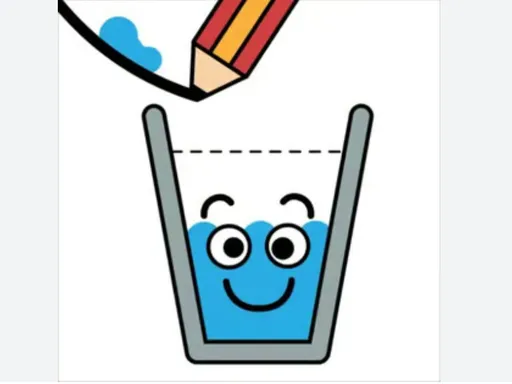
Happy Glass is built on a clear objective: guide water into an empty cup until the cup reaches the fill line and smiles. The setup looks simple, yet each stage can feel different because your drawing becomes part of the puzzle. You are not choosing from fixed tools. You are creating your own path with a line that can act like a ramp, guide, or shield. This flexibility makes the game friendly for beginners while still giving experienced players room to optimize every move in a clear logic puzzle flow that feels fair and readable.
The game became popular because it teaches itself fast. You can read one level and immediately understand the goal: get enough water into the cup without wasting too much of the stream. Obstacles then raise the challenge in a fair way. You might see ledges, gaps, moving pieces, or awkward cup positions that demand cleaner planning. Since each attempt is short, the game stays energetic and replayable even when a stage takes multiple tries.
Playing Happy Glass in Your Browser
On this site, Happy Glass runs directly in the browser, so you can start quickly on desktop or mobile. Controls are simple. On desktop, click and drag to draw. On touch devices, tap and drag with one finger. Once water starts flowing, your line influences motion through slope, angle, and collision. If the route fails, reset and adjust. Rapid retry is part of the design, and that is why progress feels smooth.
If you are starting your first session, open Happy Glass and spend a few levels learning how the first splash behaves. Many failures begin at the initial contact point near the source, not at the cup. When the first drop lands correctly, the rest of the stream often follows a stable route.
Why efficient lines matter
Short lines usually perform better than long decorative ones. They are easier to control, less likely to create accidental bounce points, and often align with star-based efficiency goals. A compact curve near the faucet can solve a level that a large maze cannot. In practical play, fewer moving variables usually means better consistency.
Why fast retries improve consistency
Happy Glass gives immediate visual feedback. You can see exactly where water escaped, where a corner was too sharp, or where a barrier caused a bad rebound. Instead of memorizing exact answers, you build intuition. That intuition is the core puzzle habit: reading motion, predicting the path, and refining with small edits.
Core Techniques That Help Most Players
1. Draw for function only
Every segment should do a job: redirect, contain, or stabilize. If a part of your line has no purpose, remove it. Decorative hooks and extra loops often increase risk without adding control.
2. Keep the cup area open enough
Players often overbuild around the cup. Too many barriers near the rim can force water to bounce away at the last moment. Add leak control where needed, but leave a clean entry channel so water can settle naturally inside.
3. Change one detail per retry
When a run almost works, avoid a full redraw. Move one endpoint, shorten one edge, or soften one angle, then test again. Isolating changes helps you understand cause and effect, which speeds improvement across all later levels.
4. Use gravity instead of fighting it
Stable solutions usually cooperate with downward flow. Steep upward deflections can create chaotic splashes and unpredictable loss. Gentle slopes and controlled turns produce more reliable fills.
What Makes Happy Glass Lasting
Official mobile listings associate the game with Lion Studios, and the concept has remained relevant for years because it balances calm presentation with meaningful challenge. The visual style is light and readable, but level design can still demand careful thought. That contrast is important: it feels relaxing, yet it rewards puzzle logic, calm planning, and brain-friendly experimentation.
The format also matches modern habits. You can complete a few levels during a short break, then return later without relearning complex systems. Browser play strengthens that convenience, especially for users who want instant access without downloads. Difficulty usually increases through smarter layouts rather than overloaded mechanics, so progression feels fair and understandable.
How to Practice Better on This Site
Start with a quick device calibration
Take a minute to test short strokes on your current input method. Mouse players can practice small arcs near the spout. Touch players can focus on shorter drags to avoid overshooting. Precision early prevents frustration later.
Read the puzzle before your first stroke
Pause briefly and identify three things: likely leak direction, ideal first landing point, and whether the cup needs extra support. This two-second scan prevents rushed lines that waste attempts.
Aim for controlled entry into the cup
Even a good route can fail if the final angle is too aggressive. Try to deliver water with a gentle descent near the center of the opening instead of a fast diagonal impact.
Reset when a plan gets messy
If your drawing becomes crowded, restart and simplify. A clean second plan is often stronger than patching a complicated first plan.
As you improve, you will notice that the best solutions often look obvious in hindsight. That is a sign of progress: you are seeing geometry and flow earlier, so each level needs fewer guesses and cleaner adjustments.
Frequently Asked Questions
Is Happy Glass free to play online?
Yes. You can play directly in your browser on this site without a separate install step.
How does each level end successfully?
Your goal is to guide enough water into the empty cup to reach the target fill line and complete the stage.
Do I need fast reactions?
Not much. Observation and planning matter more than speed in most levels.
Why can I pass but still miss top stars?
Passing measures completion, while stars usually reflect efficiency. Cleaner and shorter solutions tend to score better.
How can I improve consistently?
After each failed run, fix only the first visible mistake and retest. This builds reliable understanding of water flow patterns.
Should I play on mobile or desktop?
Both work well. Desktop can help precise angle control, while touch screens feel natural for drawing. Use whichever gives you steadier lines.
Comments
Loading comments…